Des Moines Register
- 2.3
- Rating
- 50.00K
- Installs
- Free
- Price

 Analysis by App-foxy
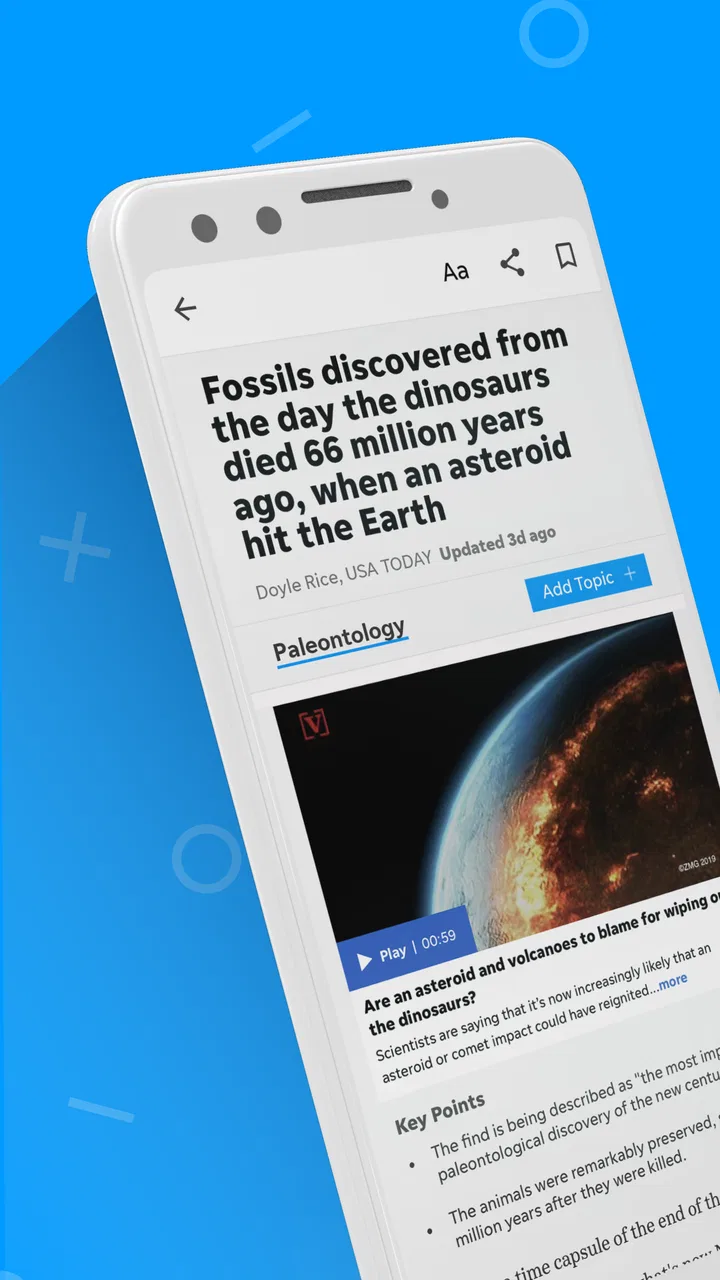
Reading local news on a phone sounds simple, but the experience depends on whether an app helps me get to the stories I actually need without making the process feel heavy. Des Moines Register is a free news and magazines app from USA TODAY Co. focused on coverage for the Des Moines area, with national reporting, photography, and video included in the same reading space. I see it as a publication-specific choice rather than a general news dashboard: its value is strongest when Des Moines is part of your everyday life.
I spent time looking at it from a practical angle: how quickly I could move from the opening screen to a useful story, how it behaved when I switched between articles and media, and whether it made sense beside a mobile browser or a broader news app. My conclusion is mixed. The local focus is meaningful, and the combination of written reporting, visual journalism, and video gives the publication more range than a text-only feed. However, the modest average rating of 2.3 from around 478 ratings suggests that many readers have encountered enough friction to affect their overall impression.
What the app is really for
The most important thing to understand is that this is not simply a generic national-news reader with a Des Moines label. The short store description identifies it as Des Moines Register, and that local identity should guide your expectations. If you want nearby reporting and also appreciate having broader stories in the same publication, it can be a sensible addition to your phone. If your main goal is to compare headlines from many unrelated publishers, a general news aggregator will probably be a better match.
You May Also Like

 Blood Strike: 2.5 Anniversary
Blood Strike’s Loadouts Turn Every Drop Into a Tactical Gamble
A close look at Blood Strike’s custom loadouts: how fast access to signature weapons reshapes its battle royale rhythm, rewards preparation, and narrows the gap between fights.

 Pandora - Music & Podcasts
Pandora’s Music Is Easy to Start, but Harder to Recover
Pandora’s strength is its low-effort path from a seed to a station. Its weak spot is how much confidence it asks you to place in connection, setup, and quiet recovery.

 8 Ball Pool
 Is Built on Rivalries, Rematches, and Routine
A close look at the rivalries, rematches, shared routines, and unanswered safety questions that turn a quick pool match into a persistent mobile community.

 Samsung Music
’s Quiet Strength Is Playing What You Already Own
Its reach comes less from spectacle than from dependable access to a personal library. That simplicity is both the app’s strongest retention engine and its ceiling.

 AccuWeather: Weather Radar
AccuWeather Review: A Quick, Clear Forecast for Everyday Decisions
For everyday plans, the best forecast is the one you can understand quickly. AccuWeather makes rain timing, radar, and local conditions easy to act on, with a few trade-offs.

 Hill Climb Racing
Why Hill Climb Racing Still Turns Crashes Into One More Run
A tiny car, a bumpy hill and one more upgrade: Hill Climb Racing keeps resurfacing because its simple chaos makes every near-miss feel personal.
More From Our News Desk
View All News


The app sits in the News & Magazines category and is rated for Everyone 10+, which makes it suitable for a broad audience while still recognizing that news can cover mature real-world subjects. I would not treat that age label as a promise that every story will feel light or family-oriented. It is better understood as a general audience classification for a news publication.
One everyday scenario shows where it fits well. Imagine checking your phone before work to see what is happening around Des Moines, opening a local article during a lunch break, and later watching a related video when you have a few more minutes. A publication app can make that routine feel more coherent than jumping among browser tabs. The trade-off is that you are committing to one newsroom’s organization and priorities instead of building a wider, cross-source view.
Local relevance matters more than breadth
For a resident, former resident, commuter, student, or anyone following family and community events in the area, local context is the main reason to try it. National services can surface major headlines quickly, but they often bury regional stories beneath a large volume of unrelated material. This app’s purpose is narrower, and that narrowness can be a strength when the news you care about is geographically specific.
On the other hand, readers who want international coverage, specialist reporting, or a broad mixture of viewpoints may find the scope limiting. The presence of national news helps, but it does not turn the app into a complete replacement for several news sources. I would use it as a local anchor in my reading routine, not as the only place I look for information.
Speed expectations and the reading workflow
Speed in a news app is not just the time it takes to open. I also judge how quickly I can identify the important stories, enter an article, return to the list, and decide whether a video is worth my attention. Des Moines Register has to balance photography and video with ordinary article text, so the experience may feel more immediate when I have a stable connection and a little less streamlined when I am trying to skim rapidly.
The visual material is useful when a story depends on place, people, or atmosphere. Strong photography can communicate something that a headline cannot, while video gives a report another layer of context. The cost is that media-rich pages generally ask more of a phone and connection than a plain text page. I would not choose this app specifically for the fastest possible headline scan; I would choose it when the local reporting and presentation are worth spending more time with.
A practical habit is to separate quick checks from deeper reading. When I only have a minute, I would scan the available headlines and open one clearly relevant item rather than loading several media-heavy stories at once. When I have time, I would let the photography or video contribute to the story instead of treating those elements as decoration. That small change makes the app feel more purposeful and reduces the frustration of trying to consume everything immediately.
There is also a difference between perceived speed and actual usefulness. An app can display a list quickly yet still feel slow if the story layout makes it difficult to find the main text. Conversely, a page with substantial visual content may take longer to settle but provide a better understanding once it does. My impression is that this publication is aimed more at complete local coverage than at an ultra-minimal, instant headline board.
Where heavy use can become uncomfortable
The demanding moments are likely to come when I move through several articles, view large photography, and add video to the same session. That kind of use naturally creates more work than reading a short text-only bulletin. On a newer phone, the difference may be easy to ignore. On an older device or a busy connection, it becomes more noticeable because every additional visual element competes for attention and resources.
I would approach a long news session in stages: read the articles that directly affect me first, then return to visual stories when I have enough time and a dependable connection. This is more than a speed trick. It also prevents the app’s richer presentation from distracting me from urgent local information, such as a developing community story or an update I need before leaving home.
For people who use news apps repeatedly throughout the day, the important question is whether the experience remains comfortable after the novelty of the photography and video fades. The app’s relatively low store average is a reason to keep expectations measured. It does not prove that every session will be poor, but it does tell me not to assume that the polished idea of a local multimedia publication automatically translates into a smooth experience for everyone.
Another trade-off appears when comparing it with a mobile browser. A browser may feel lighter for one-off visits and makes it easy to move between publications. The dedicated app is more focused, which can reduce the number of steps between opening the publication and reading its coverage. If you already have a browser routine that works well, the app needs to earn its place through convenience rather than simply repeating the same pages in a separate container.
Reliability, recovery, and everyday confidence
Reliability is especially important for news because readers often open an app at an inconvenient moment: before a trip, during a break, or while checking a developing situation. I look for a workflow that lets me recover gracefully if a page takes time to load or if I leave the app and return later. The current version is 8.10.3, so this is an actively identifiable release rather than an abandoned product label, but a version number alone does not guarantee a flawless experience.
My advice is to judge the app over several ordinary sessions instead of deciding after one opening. News content changes constantly, and the difference between a quiet reading session and a busy media session can be substantial. Open a few local articles, move back to the main feed, try a visual story, and then return after using another app. That simple test tells you more about personal compatibility than an isolated first impression.
Recovery also means knowing how to keep your routine manageable when a story does not open as expected. I would avoid repeatedly tapping the same item if the page appears to be waiting. Returning to the story list and choosing another article is often a better way to determine whether the problem is specific to one piece of content or affects the wider session. This is a small but useful habit with any publication app that mixes text, images, and video.
The developer is USA TODAY Co., which gives the app a recognizable publishing identity, but I would still separate brand familiarity from personal satisfaction. A known publisher can provide a reason to try the app, yet the day-to-day experience depends on how well the application serves your device, connection, and reading habits. That distinction matters here because the store feedback is not especially encouraging despite the publication’s established name.
What the rating tells me as a prospective user
The average rating of 2.3 is the clearest warning sign attached to the listing. I would not use it as a final verdict, because ratings can reflect different expectations and different device experiences. Still, I would take it seriously. Someone considering this app should install it with a realistic trial mindset, check whether local coverage is genuinely useful, and pay attention to how comfortable the app feels during repeated use rather than assuming the store description tells the whole story.
The app has more than 50,000 installs, which indicates that it has reached a meaningful audience without making it one of the enormous mass-market news platforms. That scale fits its regional purpose. I would interpret it as a publication app with a defined audience, not as an all-purpose service whose popularity alone proves that it will suit every reader.
If the app works well for you, the free entry point makes trying it straightforward. However, in-app purchases range from $19.99 to $69.99 per item, so I would pay attention to any purchase prompt and understand what you are choosing before confirming it. The presence of paid items changes the decision for readers who only want occasional free headlines: they should be especially clear about whether the level of access they want matches the app’s payment flow.
Device constraints and resource-conscious use
The minimum operating system is Android 8.0, so compatibility is not aimed at very old software versions. That is helpful for many users, but compatibility is only the first filter. A phone can meet the operating-system requirement and still feel less comfortable with a publication that combines written articles, photography, and video. Available storage, memory, connection quality, and the age of the device all influence how pleasant a media-rich session becomes.
I would be cautious about judging the app on a small or aging phone solely from the first few minutes. A quick headline check may be fine, while a longer sequence of image-heavy articles could reveal more strain. Conversely, someone with a recent device may find the visual side much easier to tolerate. This is why I prefer a realistic test: use it in the same places and at the same times you normally read news, rather than evaluating it only on ideal home Wi-Fi.
For people managing limited data, the app’s video content deserves deliberate use. Video can be valuable when it adds reporting that text cannot, but it is not always necessary for a quick update. I would prioritize articles first when I am away from a dependable connection and save visual exploration for later. That approach also makes the app more efficient as a daily news tool, because it keeps the urgent part of the routine separate from the optional, richer material.
Battery and storage concerns should also be considered in practical terms rather than exaggerated. I would not claim that the app is unusually demanding for every phone, but any service that presents substantial imagery and video can feel heavier than a plain text reader during extended use. If your device already struggles with other media applications, a lightweight browser page or text-focused news source may be the more comfortable option.
Who should use it, and who should skip it?
I would recommend trying it if you live in or closely follow Des Moines, want local reporting from a dedicated publication, and enjoy seeing stories supported by photography and video. It also makes sense for readers who prefer a single publication’s local-to-national flow instead of assembling headlines from several unrelated apps. The free price is useful for testing that fit before deciding whether the broader payment experience suits you.
I would skip it if you want a neutral, multi-publisher news stream, need the lightest possible reading experience, or rarely care about Des Moines-specific coverage. A general aggregator is better for comparing sources in one place, while a browser may be preferable for occasional visits and quick switching among sites. Someone who mainly wants national or international news should also look beyond this app rather than expecting its local focus to cover every need.
There is a further distinction for people who dislike subscriptions or purchase prompts. The app can be worth exploring as a free download, but the listed in-app purchase range means it is not wise to assume that every desired reading experience will remain entirely outside a paid path. I would decide based on the value of the local reporting to you, not on the download price alone.
My performance verdict after weighing the trade-offs
My bottom line is that Des Moines Register is a specialized local-news app with worthwhile multimedia ambition, but it is not an automatic recommendation for every phone or every reader. Its strongest case is personal relevance: if Des Moines news affects your work, family, travel, or community interests, the focused coverage can be more useful than a broad feed where local stories disappear. The photography and video also give certain reports more depth than a headline list can provide.
Its weaker case is friction. The low average rating makes me cautious, and the richer presentation may not be ideal for someone who values instant scanning, low resource use, or a completely predictable reading flow. I would give it a fair trial across light and heavy sessions, especially on the device and connection I use every day. If it remains comfortable and the local reporting becomes part of your routine, it earns a place on the phone. If not, a browser or broader news alternative will likely serve you better.
Released on June 1, 2012, the app has had a long presence compared with many short-lived mobile publications. That history is useful context, but longevity should not replace a present-day test. What matters to me is whether the current experience helps me reach relevant Des Moines stories, recover easily when a media page is inconvenient, and stay informed without making a simple news check feel like work.
In the end, I see it as a tool for readers with a clear local reason to use it, not as a universal news solution. I would recommend it to a friend who wants Des Moines coverage and is comfortable with a publication-centered app, while warning that the rating and paid-item structure deserve attention. For everyone else, I would start with the alternative that best matches their priority: a lightweight browser for occasional reading or a multi-source news app for wider comparison.
FAQs for Des Moines Register
01What is the Des Moines Register app?
The Des Moines Register app is a digital news platform focused on Iowa, with particular attention to Des Moines and surrounding communities. After installing it, users can browse breaking news, local reporting, politics, sports, business, entertainment, opinion pieces, and weather updates. The app is designed for readers who want convenient access to the newspaper’s coverage from an Android or iOS device.
02Is the Des Moines Register app free to download and use?
The app is generally free to download, and users may be able to read some articles without subscribing. However, access to the full collection of stories, premium journalism, eNewspaper editions, and certain subscriber features may require a paid Des Moines Register subscription. Availability and limits can change, so it is worth checking the current subscription terms shown inside the app before signing up.
03Do I need an account or subscription to read articles?
You can usually open the app and explore selected content without immediately creating an account. Nevertheless, frequent readers may encounter article limits or locked stories, especially when attempting to access premium reporting or the digital newspaper edition. Creating an account allows subscribers to sign in, manage access, and use subscription benefits across supported devices.
04What type of news and features are available in the app?
The Des Moines Register app offers a broad range of Iowa-focused journalism, including local government, community news, high school and college sports, crime reports, investigations, business, lifestyle, and state politics. Depending on the current version, readers may also find breaking-news alerts, personalized sections, photo galleries, videos, saved articles, and access to an eNewspaper-style digital edition.
05Can I receive notifications and read content offline?
The app may send push notifications for breaking stories, major local developments, sports results, and other important updates. Notification categories can typically be adjusted through the app or your device settings if you prefer fewer alerts. Offline availability depends on the feature and content type; some editions or previously loaded material may work without an internet connection, while live articles require connectivity.
Pros
- Covers local Iowa politics
- schools
- sports
- and community events.
- Offers timely breaking-news alerts for important regional stories.
- Includes strong coverage of Iowa State and local high school sports.
- Digital access is convenient on both smartphones and tablets.
- Investigative reporting can provide useful context beyond daily headlines.
Cons
- Many articles may require a paid subscription or active digital access.
- Some coverage is highly focused on Des Moines and nearby communities.
- Frequent notifications may feel excessive unless carefully customized.
- The app may use notable storage and battery for alerts and media.
- Certain features can depend on a stable internet connection.

Des Moines Register
Gallery